A traffic stop involving a driver who reportedly has significant disabilities has ignited a heated debate online after bodycam footage of the encounter began circulating on social media.
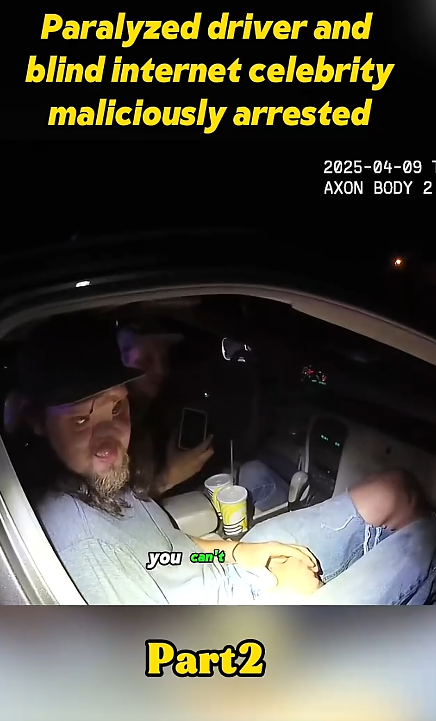
The video, which has attracted thousands of views, features a man sitting in the driver’s seat of a vehicle during a nighttime police interaction. Social media posts accompanying the footage claim the individual is both partially paralyzed and legally blind, while also describing him as an internet personality with a sizeable online following.
The title attached to many reposts of the footage alleges that the driver was “maliciously arrested,” though authorities and viewers have offered sharply different interpretations of what occurred.
According to those sharing the video, the encounter began as a routine traffic stop before escalating into a prolonged exchange between officers and the driver. Supporters of the man argue that officers failed to adequately consider his physical limitations and medical conditions during the interaction.
Meanwhile, others have urged caution, pointing out that short clips posted online often lack important context and may not show the full sequence of events leading up to an arrest.
Bodycam footage appears to show officers speaking with the driver while he remains seated inside the vehicle. The man can be seen responding to questions as the conversation continues, though the clip circulating online only captures part of the encounter.
As with many viral police videos, viewers quickly split into opposing camps.
Some social media users criticized law enforcement, arguing that officers should exercise additional patience when dealing with individuals who have disabilities.
Others defended the officers, noting that police are frequently required to balance accommodation with public safety and legal responsibilities. They argued that the full bodycam recording, police reports, and court records would be necessary before reaching conclusions about whether the arrest was justified.
Legal experts often note that disability status alone does not automatically exempt a person from law enforcement actions. However, officers are generally expected to make reasonable accommodations when interacting with individuals who have known physical or sensory impairments.
Civil rights advocates say these situations can be particularly challenging because misunderstandings may occur when disabilities affect communication, mobility, or a person’s ability to comply quickly with instructions.
“The facts matter,” one legal analyst explained. “The key questions are whether officers understood the individual’s limitations, whether accommodations were provided when possible, and whether the actions taken were reasonable under the circumstances.”
The case has also renewed broader discussions about how law enforcement agencies train officers to interact with people who have disabilities. Many departments now include specialized training focused on communication techniques, medical conditions, and de-escalation strategies.
At the same time, police organizations emphasize that every encounter is unique and that officers often make decisions based on rapidly developing circumstances that may not be fully visible in short social media clips.
As the footage continues to spread online, many viewers are calling for the release of additional information, including the complete bodycam video and any official statements related to the incident.
For now, the viral clip remains the subject of intense debate, with some seeing it as evidence of unfair treatment and others arguing that the public should wait for all the facts before deciding whether the arrest was appropriate.
One thing is certain: the incident has once again highlighted how quickly a police encounter can become a nationwide discussion when bodycam footage and social media collide.