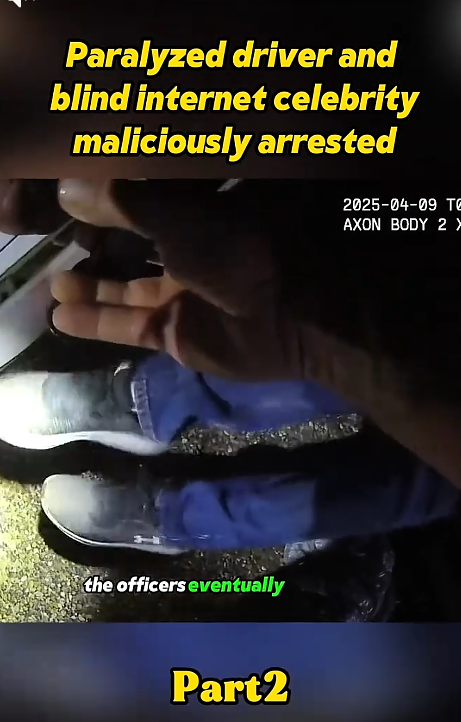
A controversial police encounter involving a disabled internet personality has sparked widespread debate after the man claimed he was wrongfully and maliciously arrested despite his physical limitations.
The incident, which was captured on bodycam footage, involves a driver who reportedly suffers from paralysis-related mobility issues and severe visual impairment. The man, who has built a following online through social media content and livestreams, alleges that officers failed to properly account for his disabilities during the encounter.
According to supporters of the content creator, the interaction began as a routine traffic stop before escalating into an arrest that they argue could have been avoided. Clips circulating online show the driver speaking with officers from inside his vehicle while attempting to explain aspects of his condition.
The footage has generated intense discussion across social media platforms, with viewers divided over whether the arrest was justified.
Supporters of the internet personality claim officers ignored important information regarding his disabilities and treated him unfairly throughout the encounter. Many have pointed to the challenges faced by individuals with mobility and visual impairments during interactions with law enforcement.
“This should have been handled differently,” one commenter wrote online. “If someone has documented disabilities, officers need to understand what limitations they’re dealing with.”
Others have urged caution before drawing conclusions, noting that short viral clips rarely show the complete circumstances leading up to an arrest. Legal experts often emphasize that bodycam footage, police reports, witness statements, and court records all play important roles in determining what actually occurred.
Authorities have not publicly characterized the arrest as wrongful, and no official findings have suggested misconduct solely based on the clips circulating online.
The case has nevertheless reignited conversations about how law enforcement agencies interact with people who have disabilities. Advocacy groups argue that encounters involving individuals with physical impairments require additional patience, communication, and accommodations whenever possible.
Police training programs in many jurisdictions include guidance on working with people who have mobility, sensory, or cognitive disabilities. However, critics say real-world situations can still lead to misunderstandings when officers are unfamiliar with a person’s specific needs.
Civil rights advocates have also pointed out that disabilities can affect how quickly someone responds to commands, exits a vehicle, or follows instructions during a stressful encounter.
At the same time, legal analysts note that disability status does not automatically prevent police from conducting investigations, issuing citations, or making arrests when officers believe there is legal justification to do so.
As footage from the incident continues to spread online, many viewers are calling for the release of additional information that could provide a fuller picture of what occurred before, during, and after the arrest.
For now, the encounter remains the subject of heated debate, with supporters alleging unfair treatment and others arguing that the complete facts should be reviewed before reaching a final judgment.
What is clear is that the incident has become another high-profile example of the scrutiny police encounters receive in the age of bodycams and social media, where a single traffic stop can quickly become a nationwide conversation.