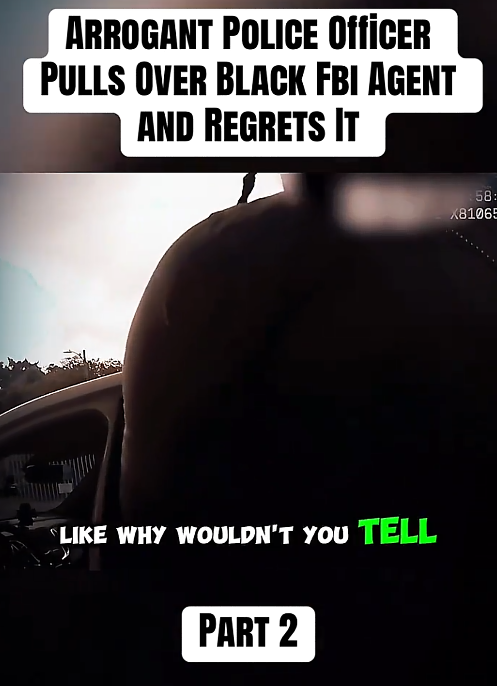
A routine traffic stop turned into a highly controversial encounter after a police officer arrested a man who later identified himself as an FBI agent, prompting widespread discussion about authority, professionalism, and police discretion.
According to reports, the incident began when a local officer pulled over a vehicle for an alleged traffic violation. What initially appeared to be a standard stop quickly escalated as the driver informed the officer that he was a federal law enforcement agent.
Bodycam footage reportedly shows a tense exchange between the two men as questions were raised about identification, authority, and the circumstances of the stop. Supporters of the FBI agent argue that the officer adopted an unnecessarily confrontational approach from the outset, while others contend that federal agents are still expected to comply with lawful police instructions.
Witnesses and online commentators have sharply disagreed about who was responsible for the escalation.
Some viewers criticized the officer’s demeanor, claiming he appeared dismissive and unwilling to consider the agent’s explanations. Others argued that a person’s occupation—whether they are an FBI agent, police officer, or private citizen—does not place them above the law.
The situation ultimately escalated to the point where the FBI agent was placed under arrest. Authorities have not publicly indicated that the arrest was based on the agent’s race, and available information suggests the dispute centered on the interaction itself rather than the driver’s identity.
Legal experts note that encounters between local law enforcement and federal agents can occasionally become complicated when questions arise regarding identification, jurisdiction, or compliance during an investigation. However, they emphasize that both parties are generally expected to follow established procedures and remain professional throughout such interactions.
“Being a federal agent doesn’t automatically exempt someone from a traffic stop,” one legal analyst explained. “At the same time, officers are expected to evaluate the facts carefully and avoid unnecessary escalation.”
The incident has generated significant attention online, where many viewers have focused on the officer’s attitude during the encounter. Critics describe the officer as arrogant and overly aggressive, while supporters argue that short clips often fail to provide the complete context surrounding an arrest.
Bodycam footage has become a central part of the public discussion, with many calling for the release of the full recording rather than isolated excerpts. Experts frequently caution that edited videos can omit critical details that influence how an encounter is understood.
Civil rights advocates have also pointed out that allegations involving race should be examined carefully and based on evidence rather than assumptions. Determining whether bias played a role in any law enforcement action typically requires a thorough review of the facts, statements, and conduct of everyone involved.
As investigations and reviews continue, the incident serves as another example of how quickly a routine traffic stop can become a national conversation when law enforcement officers—and even other law enforcement professionals—find themselves on opposite sides of an encounter.
What began as a simple traffic stop ultimately ended with an arrest, a flood of online reactions, and ongoing debate over whether the situation reflected proper policing or an unnecessary escalation.