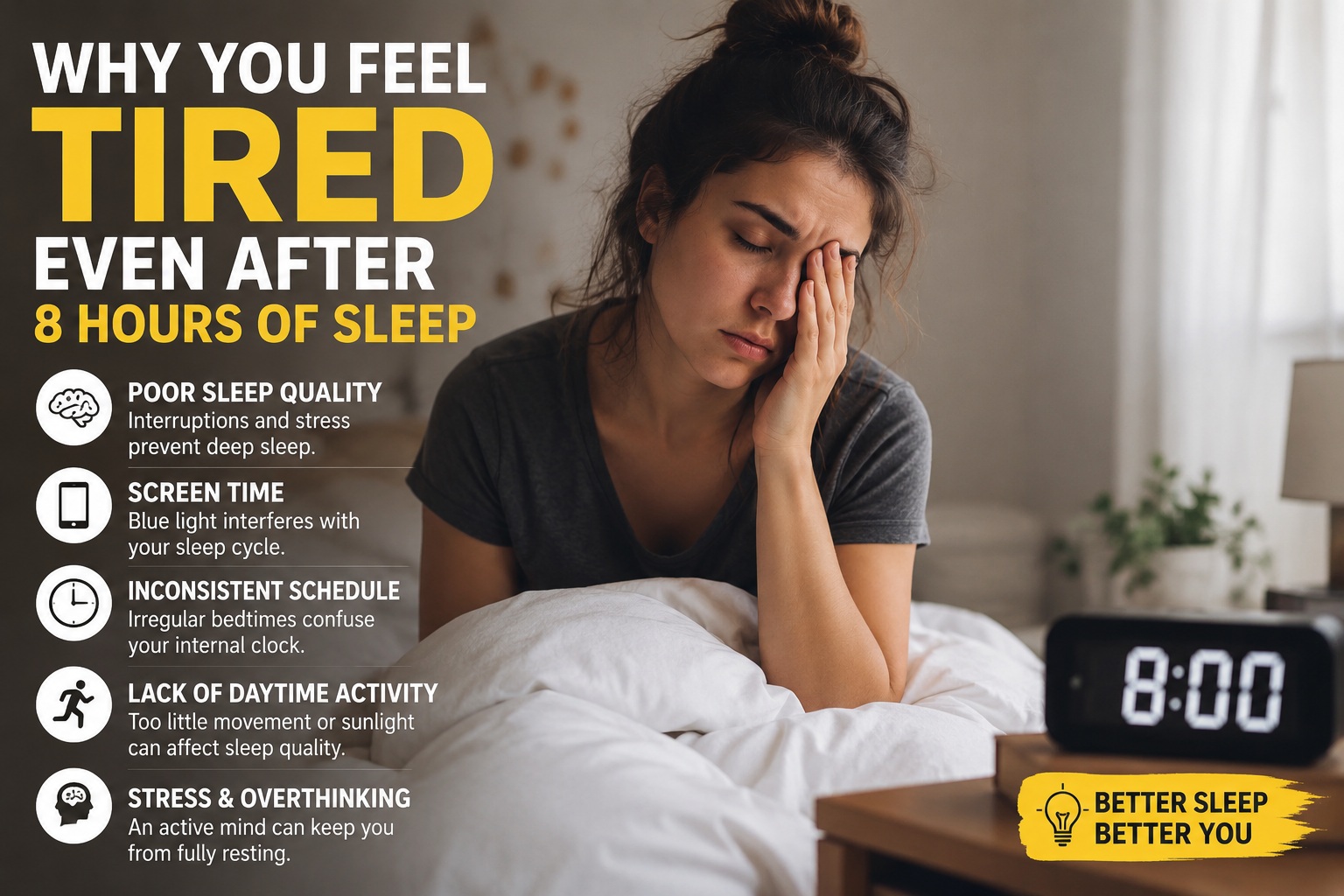
You go to bed on time. You get a full eight hours. You wake up expecting to feel refreshed… but instead, you feel just as tired—maybe even worse.
If that sounds familiar, you’re not alone. Feeling exhausted despite getting enough sleep is something more and more people are experiencing, and it’s left many wondering: what’s actually going on?
The truth is, sleep isn’t just about how long you sleep—it’s about how well you sleep.
One of the biggest reasons people wake up tired is poor sleep quality. Even if you’re in bed for eight hours, your body might not be reaching the deeper stages of sleep that are responsible for real rest and recovery. Things like stress, noise, or even subtle interruptions during the night can prevent your brain from fully switching off.
Another major factor? Your phone.
Scrolling before bed might feel harmless, but the light from screens can interfere with your body’s natural sleep cycle. It tricks your brain into thinking it’s still daytime, making it harder to fall into deep, restorative sleep. So even if you doze off, your body isn’t fully recharging.
Your routine also plays a bigger role than you might think.
Going to bed and waking up at different times every day can confuse your internal clock. Your body thrives on consistency, and without it, your sleep becomes less effective. That “tired no matter what” feeling is often your body trying to adjust.
Then there’s something people don’t always consider: what you do during the day.
Lack of movement, too much time indoors, or not getting enough natural light can all affect how well you sleep at night. Your body needs signals—like sunlight and activity—to regulate when it should feel awake and when it should feel tired.
Even your thoughts can keep you from truly resting.
Overthinking, stress, or worrying before bed can keep your mind active, even if your body is still. You might fall asleep, but your brain is still “on,” which means you don’t wake up feeling refreshed.
And sometimes, it’s as simple as dehydration or not eating properly. Your body needs the right balance of nutrients and hydration to function—and that includes during sleep.
The important thing to understand is this: feeling tired doesn’t always mean you need more sleep—it might mean you need better sleep.
Small changes can make a big difference:
- Put your phone away at least 30 minutes before bed
- Try to go to sleep at the same time every night
- Get some natural light during the day
- Create a calm, quiet sleep environment
It might not seem like much, but these habits help your body do what it’s supposed to do—rest, recover, and reset.
Because at the end of the day, eight hours only works if your body is actually able to use it.
And if you’ve been waking up tired lately, it might not be about how long you’re sleeping—but how well you’re letting yourself rest.